Case study · Privacy and consent
How TextNow rolled out a consent management platform across web, iOS, and Android
GDPR and CCPA compliance for an ad-supported app, without giving up the ad business that pays for it.

In short
TextNow is an ad-supported calling and messaging service on web, iOS, and Android. It needed a consent management platform (CMP) across every ad-supported property that satisfied GDPR and CCPA without hurting ad revenue or the user experience. I led the requirements and vendor evaluation, selected Transcend, and managed the integration across web and mobile. The result is one consent system covering the full platform, with the advertising business intact.
| Client | TextNow |
|---|---|
| Industry | Ad-supported mobile app and web platform |
| Role | Fractional product manager |
| Engagement | Project-based |
| Scope | CMP requirements, vendor evaluation and selection, integration across web, iOS, and Android |
| Regulations | GDPR, CCPA |
| Platform selected | Transcend |
| Outcome | Consent management live across all ad-supported properties, with the advertising model intact |
What was the problem?
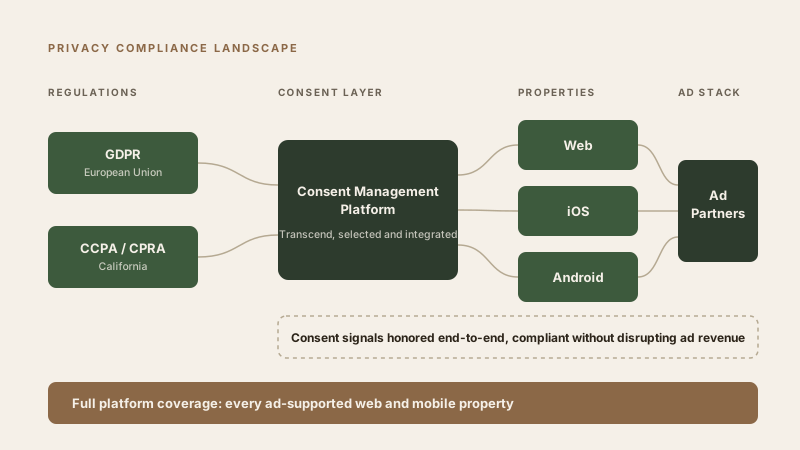
Ad-supported apps run on consent. Under GDPR in Europe and CCPA in California, users must be able to see and control how their data is used for advertising, and the choices they make have to flow correctly into the ad stack. TextNow had web, iOS, and Android properties, all ad-supported, and needed one consent system that worked across all of them.
Two constraints shaped the work. Compliance had to be real, defensible by the legal and privacy team. And the consent experience could not quietly drain ad revenue or push users away.
What did I do?
- Gathered requirements from every team that lives with a CMP: legal and privacy for the regulatory needs, ad operations for how consent signals reach the ad stack, engineering for the web and mobile SDK realities, and product for the user experience.
- Evaluated consent management platforms against three things: TextNow’s technical requirements, its regulatory needs, and its advertising ecosystem, meaning the partners and signals the ad business depends on.
- Selected Transcend and managed the integration across web, iOS, and Android, including the differences between a website privacy modal and in-app consent flows.
What changed?
Consent management is live across all of TextNow’s ad-supported properties. Visitors to textnow.com see the Transcend privacy settings modal, with required trackers and targeted advertising controls, and the same consent model covers the mobile apps. TextNow got compliant consent management without disrupting its advertising revenue model.

What I would tell another ad-supported app
- One configuration across web and mobile. Separate consent setups per platform drift apart within months.
- Follow the signal all the way to the ad partner. A consent choice that stops at the banner is a liability, and partners that require signals will stop bidding without them.
- Treat the consent experience as a product. Wording, timing, and design change consent rates, and consent rates change revenue. Test it like any other screen.
- Get legal, ad ops, and engineering in the same evaluation. Each sees a different failure mode, and the CMP has to pass all three.
Questions people ask
Why does an ad-supported app need a consent management platform?
Under GDPR in Europe and CCPA in California, users must be able to see and control how their data is used for advertising, and their choices have to reach the ad stack correctly. A consent management platform collects those choices in one place across web and mobile and passes the right signals to ad partners. Without one, an ad-supported app is exposed on compliance and risks losing demand from partners that require consent signals.
What should an ad-supported app look for in a CMP?
One configuration that covers web, iOS, and Android; correct consent signals to every ad partner the business depends on; a consent experience you can test and tune without hurting ad revenue; and a fit with what the legal and privacy team needs to defend. Evaluate against your own technical requirements, regulatory needs, and advertising ecosystem.
Need consent management that keeps the ads running?
Requirements, vendor selection, and rollout, with the revenue side in the room from day one.